
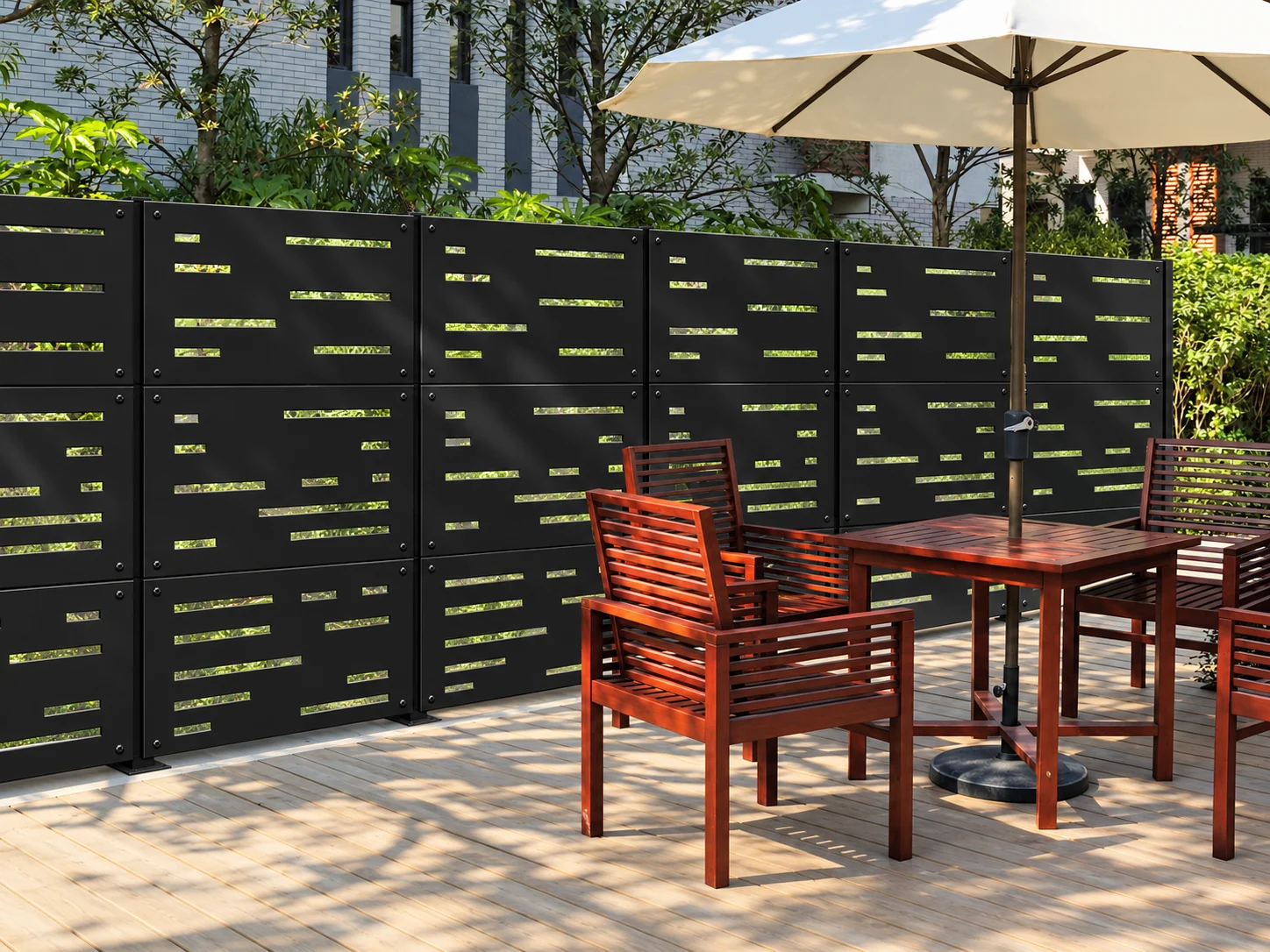
Why Create Privacy Without a Full Fence?
Many homeowners only need to block one window, a seating area, a hot tub, an outdoor kitchen or a service zone. In these cases, targeted privacy can be more flexible than replacing the entire perimeter.
Start With the Sightlines
Walk through the yard and identify where neighbors can see in, which views you want to keep and where people spend the most time. Strategic placement usually matters more than total linear footage.
1. Use Decorative Panels as Privacy Screens
Panels can be freestanding or integrated with existing structures around patios, terraces, side yards, gardens, pools and pergolas.
2. Create a Private Seating Zone
Position screens near outdoor sofas, dining tables, lounge chairs, fire pits or kitchens to create a more defined and private outdoor room.
3. Add Privacy to a Pergola
One or two screened sides can add privacy and make a pergola feel more finished without turning it into a closed room.
4. Combine Panels With Landscaping
Black panels with green landscaping can create a strong architectural contrast while keeping the composition natural.
No Rust. No Rot. No Fading. Low Maintenance. Architectural design.
Panel Sizes
3 ft × 6 ft is ideal for taller vertical screens. 4 ft × 4 ft works as a modular option for lower privacy applications.
Before Installing
- Required height and length
- Sightlines
- Wind and drainage
- Gate locations
- Existing structures
- HOA and local requirements
Ready to plan your project?
Show us the space.
Send us a photo, approximate dimensions and your ZIP code. We can help identify a practical panel size and layout for the application.