
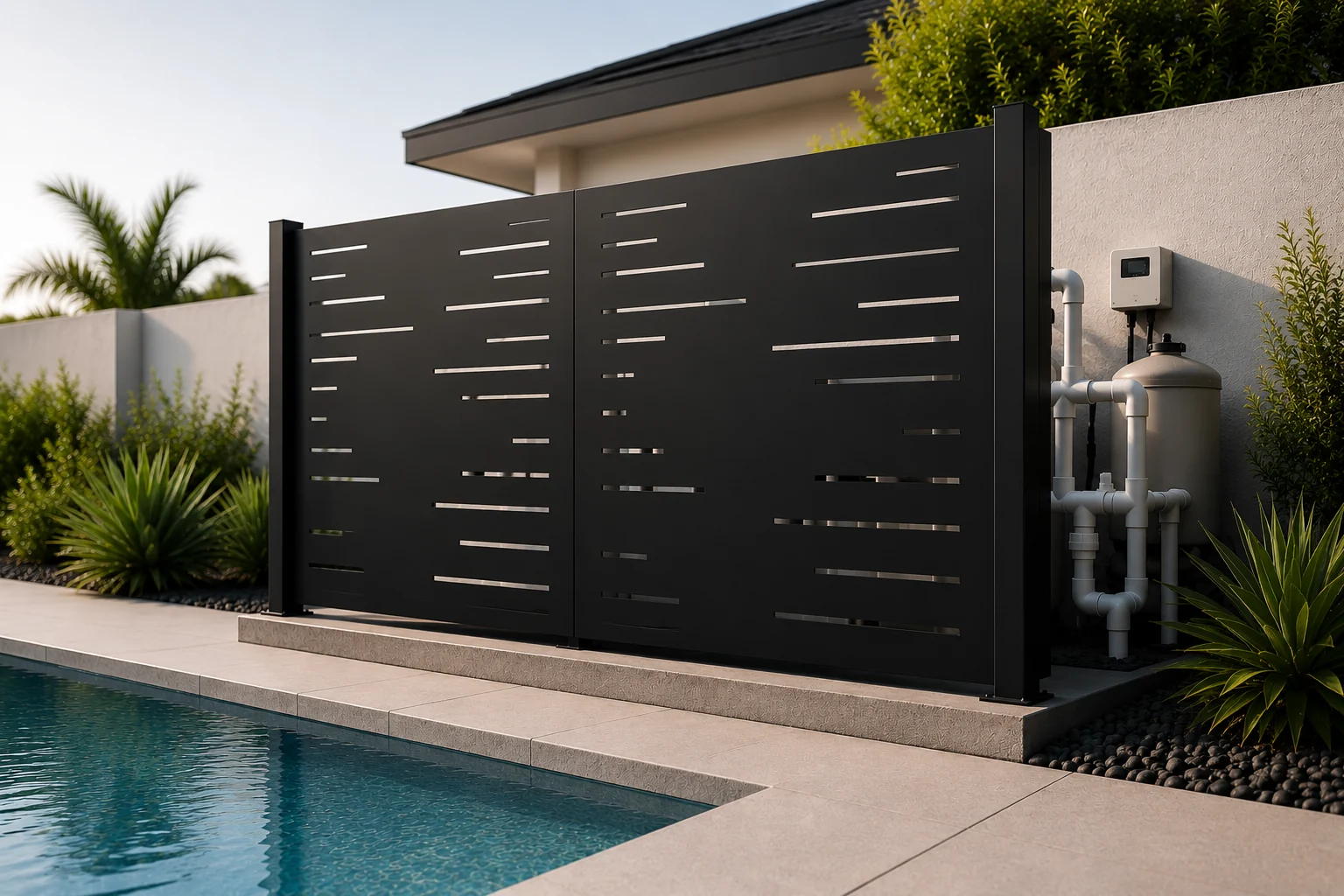
What Is the Best Way to Hide Pool Equipment?
Homeowners commonly use landscaping, wood fencing, vinyl screens, masonry walls and decorative outdoor panels. The right solution depends on the available space, the look of the backyard and how much maintenance you want over time. Decorative panels can turn a purely mechanical area into an intentional part of the outdoor design.
Do Not Forget Access and Ventilation
Pool pumps, filters, heaters and related equipment should not be sealed inside a tight enclosure. Follow the manufacturer’s required clearances, preserve airflow where needed and leave enough working room for inspection, maintenance and repairs.
Why Wood Can Become a Maintenance Problem
Wood can create a warm look, but outdoor screens stay exposed to sun, moisture, irrigation and changing weather. Over time that can mean painting, staining, sealing or replacing damaged sections.
A Modern Alternative: LatticeSmart Decorative Panels
LatticeSmart aluminum composite panels can be used around pool pumps, filters, equipment areas, side yards, pergolas and privacy zones. The screen can conceal the equipment while becoming an architectural feature instead of an afterthought.
No Rust. No Rot. No Fading. Low Maintenance. Modern architectural design.
Choose the Right Panel Size
3 ft × 6 ft works well when more height and privacy are needed. 4 ft × 4 ft is a practical modular option for lower equipment areas. The final layout should respond to the actual dimensions and viewing angles.
How Many Panels Do You Need?
As a quick reference, one 3×6 ft panel covers about 3 linear feet and one 4×4 ft panel covers about 4 linear feet. You may only need to screen the front, or you can combine panels to cover two or three sides when appropriate.
Before You Install
- Measure the equipment width and height
- Confirm manufacturer clearances and airflow requirements
- Preserve technician access
- Identify the sides visible from the pool or patio
- Plan a removable panel or access opening if useful
Ready to plan your project?
Show us the space.
Send us a photo, approximate dimensions and your ZIP code. We can help identify a practical panel size and layout for the application.