
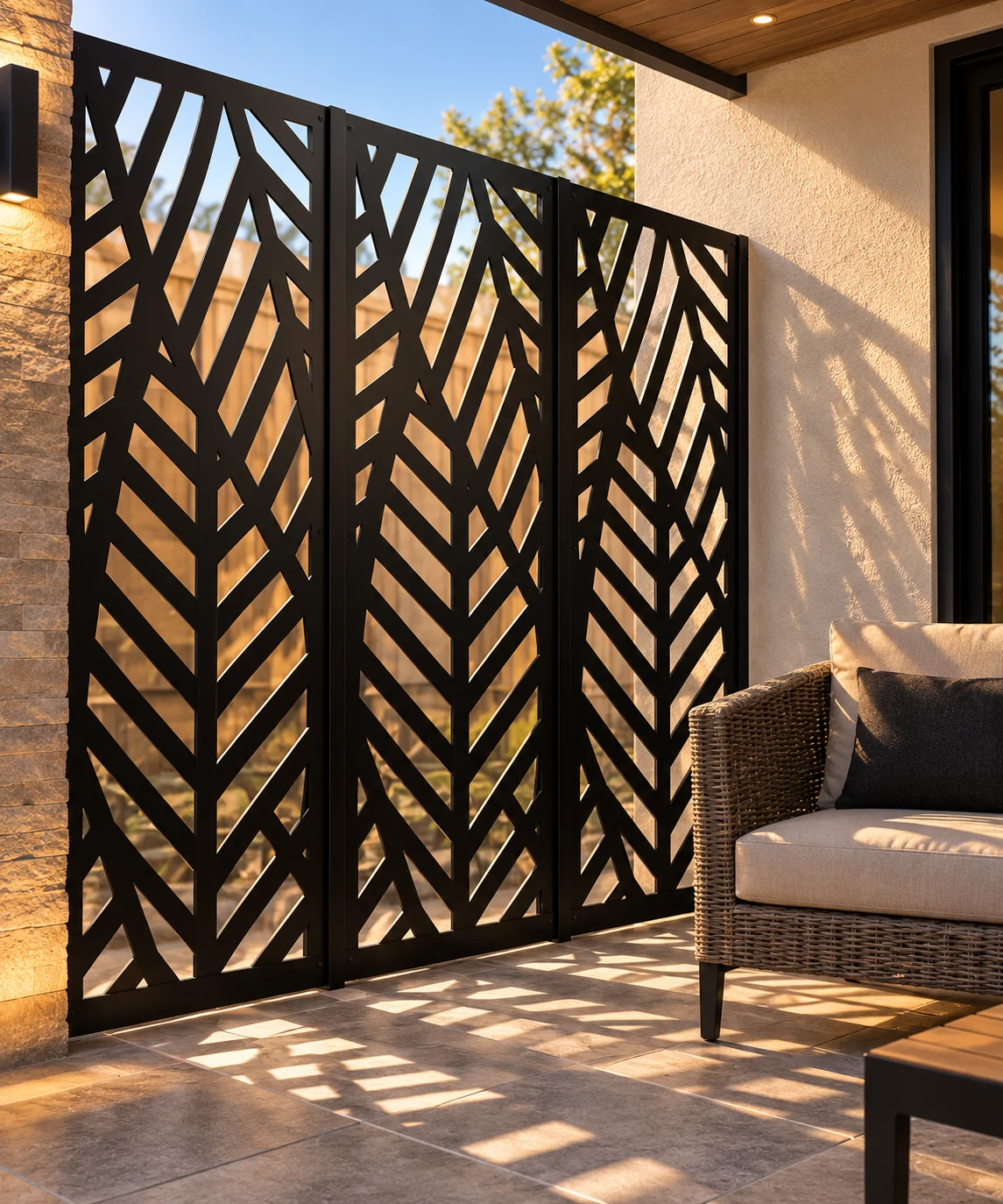
What Should a Good Outdoor Privacy Screen Offer?
- Privacy
- Outdoor durability
- Low maintenance
- Appearance
- Ease of cleaning
- Practical installation
1. Wood
Wood offers a warm, natural look and can be customized with paint or stain. The tradeoff is periodic maintenance, and long-term exposure to moisture can lead to deterioration.
2. Vinyl
Vinyl is easy to clean and does not rot like wood. Product quality, heat exposure and the desired visual style should still be considered.
3. Steel
Steel can provide high strength and a substantial appearance. If the material or coating is not appropriate for outdoor exposure, rust can become a maintenance issue.
4. Aluminum
Aluminum is widely used outdoors because it is lightweight, low-maintenance and does not have the same rust issues as traditional steel.
5. Aluminum Composite Panels
Aluminum composite panels combine a clean architectural surface with the ability to create decorative patterns. LatticeSmart uses this material for privacy, fencing, equipment screens, pergolas and outdoor dividers.
No Rust. No Rot. No Fading. Low Maintenance. Decorative architectural patterns.
Which Material Works Best Near a Pool?
Around water, look for materials that do not rely on frequent painting or sealing and that do not have wood-rot concerns. Drainage, local pool-barrier rules and the specific installation still matter.
How to Choose
Consider how much privacy you need, how much maintenance you want, the architecture of the property, water exposure, ventilation requirements and whether you want a decorative or solid look.
Ready to plan your project?
Show us the space.
Send us a photo, approximate dimensions and your ZIP code. We can help identify a practical panel size and layout for the application.